


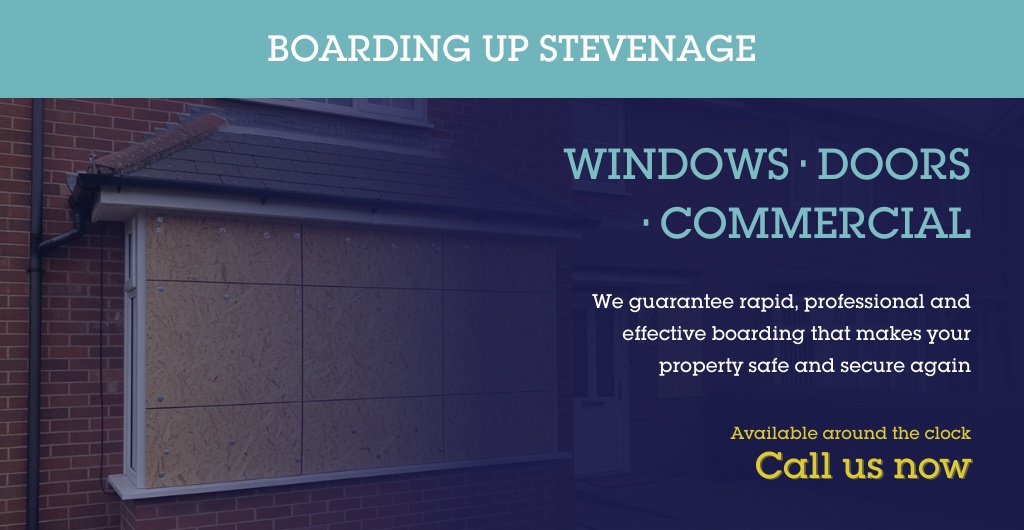
Boarding Up for Vacant Property in Stevenage (SG1–SG19)
A vacant property can go from “quiet” to “at risk” very quickly. Whether it’s between tenants, awaiting probate, mid-refurb, or simply unoccupied while you arrange a sale, an empty building is more vulnerable to break-ins, vandalism, weather ingress and opportunistic access.
If you need boarding up for a vacant property in Stevenage or anywhere across the SG postcode area, we can help you secure the property with practical, insurance-friendly measures—without overcomplicating the job. We’ve been trading for 10+ years, we’re fully insured, and our technicians are DBS-checked.
For urgent attendance (including out of hours), call 01438 594 023.
Why vacant properties need a different approach
Vacant and void buildings aren’t just “empty houses”. They often have:
- No daily activity to deter intruders
- Higher risk of repeat attempts once someone has tested an entry point
- Unnoticed minor damage that becomes major (a smashed window leads to rain ingress, damp, and internal damage)
- More complicated access (keys with agents, code locks, site fences, boarded rear alleys, etc.)
The goal of boarding up a void is usually twofold:
- Make safe immediately (stop access and reduce weather exposure)
- Put in place temporary boarding or medium-term security that reduces repeated call-outs
If you’re unsure which level of protection you need, we’ll talk it through on the phone and give a realistic ETA based on workload and location. We don’t promise fixed arrival times—conditions vary—but we prioritise urgent risks to people and property.
Typical vacant property scenarios we attend in Stevenage & SG areas
Vacant properties can require boarding up for many reasons. Here are common call-out scenarios we see across Stevenage and the wider SG area:
Forced entry after a break-in
A kicked-in rear door, broken lock area, or damaged frame often means a standard lock change isn’t enough on its own. If the opening isn’t secure, we may recommend a temporary steel door for medium-term protection, or board up door solutions while permanent repairs are arranged.
If the incident has just happened, see our guidance on burglary repairs and boarding up.
Smashed or missing glazing
A board up broken window call might be a single panel in a ground-floor window, or multiple panes on a vacant block. The priority is to prevent access and prevent further damage (especially in cold, wet weather).
This is typically handled via window boarding in Stevenage using appropriately sized sheets and secure fixings.
Vandalism and repeated targeting
Once a vacant building looks accessible, it can be targeted again—especially if previous boarding was lightweight or easily removed from outside. We often see makeshift DIY boarding that’s been pulled off, or a single screw-per-corner “cover-up” that doesn’t deter anyone.
For vandalism-related incidents, see vandalism repair and boarding.
Storm damage creating a new opening
Loose roof sections, damaged soffits, or broken skylights can leave an opening that isn’t obvious from the street. In a void property, that can go unnoticed until water has caused significant internal damage.
Where safe and accessible, we can handle boarding for overhead openings via roof boarding and advise on what needs a roofer afterwards.
Accidental impact damage
Vehicle impact to boundary structures, doors, or glazing can create an immediate security risk. The priority is to make safe and secure property access points until insurers, landlords or contractors can proceed.
More on these situations here: accident damage boarding.
How we board up vacant properties (methods that suit voids)
Vacant properties benefit from methods designed to resist tampering and reduce repeat visits. The right option depends on the opening, the condition of frames, and how long the building will be empty.
1) Plywood vs OSB (and when each makes sense)
We commonly use:
- 18mm exterior-grade plywood for larger openings and higher-risk locations (stronger, better screw-holding, better long-term performance in damp conditions)
- 12mm OSB for smaller, lower-risk openings or internal separations where appropriate
We’ll choose the material based on the opening size, exposure to weather, and the risk level. If you have insurance requirements (or a property management spec), tell us—where possible we’ll match it.
2) Fixing methods: secure, tidy, and appropriate to the substrate
The difference between “covered” and “secured” often comes down to fixings.
Depending on the situation, we may use:
- Internal timber framing (non-destructive where possible) so the board can’t be removed from outside
- Coach screws / through-bolting for higher security (especially where the frame is compromised)
- Anti-tamper fixings where external access is a concern
- Careful placement to avoid cracking remaining glass or damaging salvageable frames
If the frame is too damaged for a non-destructive method, we’ll explain the options before proceeding.
3) Doors: boarding vs temporary steel doors
A boarded doorway can be the quickest way to stop access, but it isn’t always the best medium-term answer—especially if trades need regular entry.
For vacant properties, a temporary steel door is often a practical upgrade because it:
- Provides a robust, lockable access point
- Reduces the temptation to force entry again
- Allows authorised visits without removing boards each time
Door-related work is covered under door boarding.
4) Shopfronts and larger commercial openings on void units
Empty commercial units can be especially vulnerable to repeated attempts—large glazed panels, wide spans, and easy visibility of an “unoccupied” interior.
If you’re securing an empty unit, shopfront boarding uses larger sheets, stronger fixing methods, and a finish that’s suitable for street-facing frontage while the unit is marketed or refitted.
5) Perimeter measures (where appropriate)
Sometimes the issue isn’t only the opening—it’s uncontrolled access to the building perimeter. For some sites, temporary perimeter control can reduce the chance of attempts altogether. If you need this, see temporary fencing.
What to expect when you call us (and what you’ll receive)
When you call 01438 594 023, we’ll ask a few practical questions to get the right solution to you:
- Property type (house, flat, commercial unit, block, outbuilding)
- Exact openings affected (front door, rear door, ground-floor window, rooflight, etc.)
- Whether the property is currently accessible/unsafe
- Whether police/insurer are involved and if a reference number exists
- Any access constraints (keyholder, gated access, alarm, boarding already in place)
On site, we aim to work cleanly and methodically. For vacant properties, we’ll also consider “next visits”—we don’t want you paying to undo and redo security every time a contractor attends.
You can request typical documentation such as:
- Time-stamped photos (before and after)
- An itemised invoice
- A short work statement describing materials and fixing approach
We’re not loss adjusters or legal advisers, but we can provide the kind of records insurers commonly request. See insurance claims support for practical guidance.
A typical vacant property boarding-up scenario (what it often looks like)
A typical call-out might involve a void residential property across SG1–SG4 where the rear ground-floor window has been forced and the frame is splintered. The caller might be a landlord, agent, or facilities manager who’s found the damage during a routine visit.
In that scenario, we’d usually:
- Assess whether the opening can be secured non-destructively
- Remove loose shards only where needed to prevent injury (without turning it into a “glazing job”)
- Fit an exterior-grade board sized to fully cover the opening with a solid fixing method that can’t be undone from outside
- Check for secondary vulnerabilities (adjacent windows, weak door panels, gaps around frames) and highlight them to you
- Provide photos and an invoice suitable for property management or insurance records
If the door area has also been attacked, we may advise a temporary steel door rather than repeated temporary boarding on the same entrance.
Vacant properties, insurance, and reducing follow-on costs
If you’re dealing with a claim—or you simply want to avoid one—these steps help:
- Take clear photos as soon as you notice the damage (if it’s safe)
- Keep any police reference number handy if there’s been a break-in or vandalism
- Don’t leave openings “overnight until the glazier comes”—a single night can lead to more damage or entry
- Consider whether you need a lockable solution for contractor access (temporary steel doors often reduce repeated boarding charges)
For pricing factors (without vague promises or made-up figures), see boarding-up pricing.
Areas we cover for vacant property boarding (Stevenage & SG postcodes)
We cover Stevenage and the SG postcode area (SG1–SG19). That includes local call-outs in and around Stevenage itself as well as surrounding towns and villages.
If you’re looking for local coverage pages, you may find these useful:
For a broader view, see areas we cover.
FAQs: Vacant property boarding up in Stevenage & SG
How quickly can you attend a vacant property?
We aim to attend as quickly as possible and we prioritise urgent security risks. We can’t guarantee fixed arrival times because workload, access and travel conditions vary, but if you call 01438 594 023 we’ll give you a realistic ETA.
Can you board up a vacant property out of hours?
Yes. Vacant properties are often discovered outside normal hours (agents’ visits, neighbour reports, alarm activations). We provide out of hours and 24/7 boarding up support when you need it—especially for a smashed window or forced door.
For urgent help, see emergency boarding up.
Do you secure doors as well as windows?
Yes. We can board up door openings and also advise when a temporary steel door is a better option for medium-term void security. Door work is covered under door boarding.
What if the window frame is badly damaged?
If the frame is too compromised to take fixings safely, we’ll explain the options before proceeding. That may involve a stronger fixing method (such as through-bolting) or a different approach to ensure the board can’t be removed from outside.
Will boarding stop water getting in?
Boarding primarily focuses on security, but we also aim to reduce weather ingress where possible—especially on exposed elevations and roof openings. If the issue is roof-related, roof boarding may be the most suitable route.
Can you board up an empty commercial unit or shopfront?
Yes. Vacant commercial units often need wider-span boarding and robust fixings. If the frontage has been attacked or glazing is missing, we can get the shopfront boarded up to reduce repeat attempts and protect the interior while longer-term repairs are arranged. See shopfront boarding.
Is boarding up covered by insurance for vacant properties?
Sometimes—coverage varies by policy, vacancy period, and circumstances (burglary, storm, vandalism). We’re not insurers, but we can provide documentation (photos, invoice, work notes) that typically helps when you speak to your provider. Start here: insurance claims support.
I manage multiple voids across SG postcodes—can you work with agents and facilities teams?
Yes. We regularly deal with keyholders, agents and property managers. If you have access rules, site instructions, or need consistent documentation for each call-out, tell us when you book.
Related pages (to help you choose the right next step)
- Learn what the process involves: what boarding up means and when it’s used
- If you need urgent attendance: emergency boarding up
- For specific openings: window boarding in Stevenage and door boarding
- For void security planning: vacant property boarding up (this page)
Ready to secure a vacant property?
If you need to secure property access points, arrange temporary boarding, or deal with a board up broken window situation in Stevenage or across SG1–SG19, call us now.
Ready to get started? Call 01438 594 023 or email us for a free, no-obligation quote.
